Imagine a limitless supply of critical gas, generated right on demand, eliminating logistical headaches, supply chain worries, and the constant cycle of cylinder deliveries. This isn't a futuristic dream; it's the reality offered by modern nitrogen generators. Understanding how N2 generators work: technologies & principles reveals a smart, sustainable solution for countless industrial applications.
These clever systems essentially pull nitrogen directly from the air around us, separating it from oxygen and other trace gases to provide a continuous, on-site stream of highly pure N2. It's a game-changer for operational efficiency and cost control, transforming how businesses manage their gas supply.
At a Glance: Understanding N2 Generators
- Core Function: Separate nitrogen from ambient air (78% N2, 21% O2) on demand.
- Key Benefit: On-site, continuous supply, eliminating external deliveries and their associated costs/logistics.
- Purity Levels: Highly controllable, ranging from 90% up to 99.999%+, depending on technology and application.
- Main Technologies: Pressure Swing Adsorption (PSA), Membrane Systems, and Cryogenic Distillation.
- Operational Sequence: Air compression, filtration, separation, storage, and monitoring.
- Key Applications: Essential for industries like laser cutting, heat treatment, metal powder storage, and soldering.
- Sustainability: Reduces carbon footprint compared to bottled gas transport.
Why On-Site Nitrogen? Your Operations, Elevated
Before diving into the nuts and bolts of the technology, let's address the fundamental question: Why bother generating nitrogen on-site when you could just order cylinders or bulk liquid? The answer lies in a compelling suite of benefits that directly impact your bottom line and operational capabilities.
First and foremost, there are significant cost savings. Purchasing nitrogen by the cylinder or even in bulk can carry substantial ongoing expenses, including gas costs, delivery fees, rental charges for tanks, and the labor involved in handling and changing cylinders. An on-site generator amortizes its initial investment over time, often paying for itself within a few years by drastically reducing these recurring costs.
Beyond the immediate financial benefits, consider the improved sustainability. Transporting nitrogen, whether by truck for cylinders or larger tankers for bulk liquid, contributes to carbon emissions. Generating nitrogen on-site dramatically reduces this carbon footprint, aligning your operations with modern environmental goals and corporate responsibility initiatives.
Then there's the invaluable advantage of a continuous, on-demand supply. No more worrying about running out of gas mid-shift, waiting for deliveries, or managing inventory. Your process needs nitrogen, and it's there. This leads to reduced downtime and far greater control over your production schedule. You also gain precise control over purity levels, allowing you to tailor the nitrogen output to the exact requirements of your application, from 95% up to 99.999% or even higher. This level of customization ensures optimal process performance without overpaying for purity you don't need, or compromising quality with insufficient purity. Understanding N2 generators often starts with grasping these core advantages.
The Core Principle: Separating the Air You Breathe
At its heart, every nitrogen generator operates on a surprisingly simple principle: separating nitrogen from the ambient air we breathe. Air isn't a single gas; it's a mixture, primarily composed of approximately 78% nitrogen (N2), 21% oxygen (O2), and about 1% other trace gases like argon, carbon dioxide, and water vapor.
The challenge, and the ingenuity of nitrogen generation technologies, lies in efficiently and economically isolating that 78% nitrogen. Each technology employs a distinct physical method to achieve this separation, leveraging differences in molecular size, weight, boiling points, or adsorptive properties. The goal is always the same: to produce a purified stream of nitrogen while safely venting the unwanted oxygen and other gases back into the atmosphere. This on-demand separation eliminates the need for external suppliers, allowing you to produce nitrogen exactly when and where you need it.
Unpacking the Technologies: How N2 Generators Work Under the Hood
The specific method an N2 generator uses to perform this separation is where the different technologies diverge. Each has its strengths, ideal applications, and operational characteristics.
Pressure Swing Adsorption (PSA): The Molecular Sieve Master
Pressure Swing Adsorption (PSA) is one of the most widely used and efficient technologies for on-site nitrogen generation, particularly when purities up to 99.99% are required.
The Underlying Mechanism:
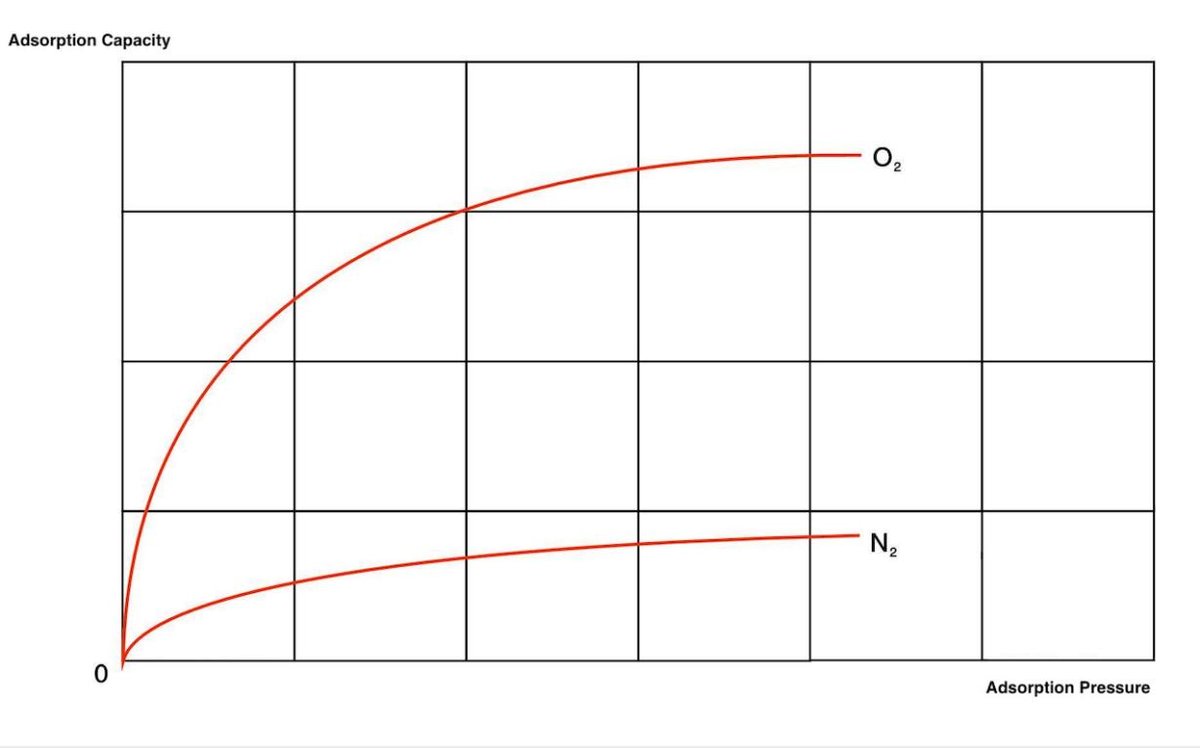
PSA technology hinges on a material called Carbon Molecular Sieve (CMS). Think of CMS as a highly specialized filter that preferentially "traps" certain molecules based on their size and polarity. Oxygen molecules (O2) are smaller than nitrogen molecules (N2) and also have a stronger affinity for the CMS material.
The PSA process typically involves two identical vessels, or towers, packed with CMS. Here’s a simplified breakdown of the cycle:
- Adsorption Phase (Pressurization): Compressed, filtered ambient air is directed into one of the vessels. As the air passes through the CMS bed, oxygen, carbon dioxide, and water vapor molecules are adsorbed (stuck to the surface) by the CMS. The larger, less adsorptive nitrogen molecules, however, pass through unhindered, exiting the top of the vessel as purified nitrogen gas.
- Depressurization & Regeneration: While one vessel is busy generating nitrogen, the other is undergoing regeneration. Once the CMS in the first vessel becomes saturated with oxygen, the air flow is switched to the second vessel. The first vessel is then rapidly depressurized to atmospheric pressure. This pressure drop causes the adsorbed oxygen and other contaminants to be released from the CMS and vented out into the atmosphere, effectively "cleaning" the sieve. A small portion of the product nitrogen from the active tower is often used to assist in flushing the regenerating tower, ensuring thorough regeneration.
- Repressurization: The regenerated vessel is then slowly repressurized, often using a small amount of product nitrogen, bringing it back up to operational pressure before it's ready to take over the adsorption phase.
These two vessels continuously cycle between adsorption and regeneration, ensuring a steady, uninterrupted flow of nitrogen. The "swing" in pressure—from high during adsorption to low during regeneration—is what gives the technology its name.
Key Characteristics of PSA Systems:
- Purity: Excellent for high purities, typically ranging from 95% to 99.99%.
- Efficiency: Highly efficient for these purity ranges.
- Reliability: Robust and well-established technology.
- Maintenance: Involves periodic replacement of CMS (though rarely) and routine compressor maintenance.
- Applications: Ideal for laser cutting, inerting, heat treatment, food packaging, and electronics manufacturing.
Membrane Systems: The Selective Permeator
Membrane technology offers a simpler, often lower-maintenance approach to nitrogen generation, particularly for applications requiring slightly lower purities (up to 99.9%) or where simplicity and a compact footprint are paramount.
The Underlying Mechanism:
Membrane nitrogen generators utilize bundles of incredibly fine, hollow polymeric fibers. These fibers are designed with highly selective permeability. When filtered compressed air is introduced into the bundle, the different components of air permeate through the membrane walls at different rates.
Specifically:
- Selective Permeation: Oxygen, water vapor, and other "fast gases" have a higher affinity for and dissolve more readily into the membrane material, and also diffuse through it faster. They rapidly permeate through the fiber walls and are vented to the atmosphere as waste.
- Nitrogen Passage: Nitrogen molecules, being "slow gases," permeate much more slowly. They continue to flow down the length of the hollow fibers and exit the other end as a concentrated, purified stream of nitrogen gas.
The purity of the nitrogen produced by a membrane system is controlled by throttling the outlet flow. If you increase the flow rate of nitrogen, you give less time for oxygen to permeate out, resulting in lower nitrogen purity. Conversely, if you decrease the nitrogen flow (allowing more time for oxygen to permeate), you increase the purity.
Key Characteristics of Membrane Systems:
- Purity: Typically ranges from less than 90% to 99.9%, with 95-98% being common.
- Simplicity: Fewer moving parts than PSA systems, leading to lower maintenance requirements.
- Compactness: Often smaller and lighter, making them suitable for mobile applications or limited spaces.
- Durability: Robust, especially in harsh environments, as they are less sensitive to moisture than CMS.
- Applications: Tire inflation, inerting tanks, fire prevention, food packaging, and specialized laboratory uses where ultra-high purity isn't critical.
Cryogenic Distillation: The Ultra-High Purity Powerhouse
For applications demanding extremely high purities (99.999%+ or "five nines") and very large volumes, cryogenic distillation is the method of choice. This is the same fundamental process used by industrial gas suppliers to produce bulk liquid nitrogen.
The Underlying Mechanism:
Cryogenic distillation is a more complex, energy-intensive process that exploits the different boiling points of air's constituent gases.
- Air Liquefaction: Ambient air is first extensively filtered, compressed, and then cooled to extremely low temperatures (typically below -180°C or -292°F). This super-cooling causes the air to condense and liquefy.
- Fractional Distillation: The liquid air is then fed into a distillation column. As the liquid air warms slightly within the column, the different components begin to boil off at their respective boiling points.
- Nitrogen boils at approximately -196°C (-321°F).
- Argon boils at approximately -186°C (-302°F).
- Oxygen boils at approximately -183°C (-297°F).
Because nitrogen has the lowest boiling point, it boils off first and rises to the top of the column, where it is collected as ultra-high purity gas. Oxygen and argon are separated lower down the column.
Key Characteristics of Cryogenic Systems: - Purity: Capable of producing ultra-high purity nitrogen (99.999% and beyond), as well as oxygen and argon as co-products.
- Volume: Suitable for very large-scale industrial requirements, often thousands of cubic meters per hour.
- Initial Investment: Significantly higher capital expenditure compared to PSA or membrane systems.
- Operational Costs: Higher energy consumption due to the intensive cooling process.
- Complexity: More complex to operate and maintain, requiring specialized personnel.
- Applications: Semiconductor manufacturing, electronics, steel production, and large-scale chemical processing.
Bringing It All Together: The General Operating Sequence
Regardless of the separation technology employed, most nitrogen generators follow a similar overarching operational sequence. Think of it as a well-orchestrated ballet of air, pressure, and intelligent controls.
- Air Compression & Filtration: The Foundation of Purity
It all starts with ambient air. A dedicated air compressor draws in air from the surrounding environment. This compressed air, however, isn't clean enough for direct use in the separation process. It contains dust, moisture, oil vapors from the compressor itself, and other particulate matter. Therefore, the first critical step is thorough filtration. A series of filters, including particulate filters, coalescing filters (to remove oil and water aerosols), and sometimes activated carbon filters (to remove oil vapor), ensure the compressed air is clean and dry. This rigorous pre-treatment is vital for protecting the separation module and ensuring the longevity and efficiency of the entire system. - Separation: The Heart of the Generator
The clean, dry compressed air then enters the core of the nitrogen generator: the separation module. This is where one of the technologies we discussed earlier—PSA, membrane, or cryogenic—comes into play. Here, oxygen and other undesirable gases are removed, leaving behind a concentrated stream of nitrogen. The specific design and operational parameters of this stage dictate the final purity and flow rate of the nitrogen produced. - Storage: Ensuring a Consistent Supply
Once separated, the purified nitrogen gas may be directed to a buffer tank or storage vessel. This storage acts as an accumulator, ensuring a consistent and stable supply of nitrogen for downstream processes, even if there are minor fluctuations in demand or in the generator's output. The buffer tank also allows the generator to run more efficiently by maintaining a steady output, preventing frequent start-stop cycles. - Monitoring & Control: Precision and Safety
Modern nitrogen generators are equipped with sophisticated sensors and controllers. These systems continuously monitor critical parameters such as:
- Pressure: Ensuring optimal operating pressures throughout the system.
- Flow: Measuring the output volume of nitrogen.
- Purity: Crucially, measuring the concentration of nitrogen (and thus, the residual oxygen content) to guarantee it meets the required specifications.
Many systems feature automated controls that can adjust operating parameters in real-time to maintain desired purity and flow, even when demand changes. Alarms alert operators to any deviations, ensuring safety and continuous quality.
This structured flow ensures that from ambient air to a usable nitrogen stream, every step is optimized for purity, efficiency, and reliability.
Where Nitrogen Makes a Difference: Essential Applications
On-site nitrogen generation isn't just a technical marvel; it's an indispensable tool across a vast array of industries. Its inert, non-reactive properties make it perfect for applications where oxygen, moisture, or other reactive gases would be detrimental. While the possibilities are broad, let's focus on some critical uses, especially in the metal industries where its impact is profound.
Laser Cutting: Achieving Pristine Edges
In the world of metal fabrication, laser cutting demands precision and a flawless finish. Nitrogen plays a crucial role here as a shield gas. During the laser cutting process, the intense heat of the laser melts the metal. If oxygen were present, it would react with the molten metal, causing oxidation, slag formation, and a discolored, rough cut edge. By blasting nitrogen at high pressure onto the cutting zone, an inert atmosphere is created, effectively pushing away oxygen and preventing oxidation. The result? A clean, burr-free, oxidation-free cut edge that often requires no further finishing, saving time and costs.
Heat Treatment: Preserving Metal Integrity
Heat treatment processes, such as annealing, hardening, or brazing, involve heating metals to high temperatures to alter their physical and chemical properties. Conducting these processes in an oxygen-rich environment would lead to severe surface oxidation, scaling, and potential changes to the metal's desired metallurgical properties. Nitrogen is used to create an inert atmosphere inside heat treatment furnaces, displacing oxygen and preventing these undesirable reactions. This preserves the surface integrity, color, and precise metallurgical composition of the treated parts.
Metal Powder Storage: Preventing Oxidation and Explosions
The increasing use of metal powders in additive manufacturing (3D printing) and powder metallurgy brings unique challenges. Many metal powders are highly reactive and susceptible to oxidation when exposed to air and moisture. Furthermore, fine metal powders can pose an explosion risk in the presence of oxygen. Nitrogen is employed to blanket containers holding these powders, displacing oxygen and minimizing moisture uptake. This inert blanketing prevents premature oxidation, maintains the powder's quality, and mitigates the risk of combustible dust explosions, ensuring safety and material integrity.
Soldering: Enhancing Bond Quality
In electronics manufacturing and other applications requiring strong, reliable solder joints, nitrogen proves invaluable. During soldering, the heated solder can react with oxygen in the air, leading to poor wetting, dross formation, and weak, brittle joints. By creating a low-oxygen environment around the solder joint using nitrogen, these issues are avoided. The nitrogen helps reduce surface tension, promotes better flow and wetting of the solder, and prevents oxidation of the solder and the components being joined. The outcome is superior bond quality, improved electrical conductivity, and a cleaner, more aesthetically pleasing finish.
Beyond these metal-focused applications, nitrogen's inert properties are critical in food and beverage packaging (to extend shelf life), chemical inerting, pharmaceutical manufacturing, laboratory environments, and tire inflation, demonstrating its broad and indispensable utility.
Choosing Your N2 Generator: Key Considerations
With different technologies and varying capabilities, selecting the right nitrogen generator for your operation can seem daunting. However, by focusing on a few key decision criteria, you can pinpoint the system that best fits your needs.
1. Purity Needs: How Clean Does Your Nitrogen Need to Be?
This is perhaps the most critical factor. Different applications demand different purity levels, and matching the generator to this requirement is essential for both performance and cost-effectiveness.
- 90-99.5% Purity: Often sufficient for general inerting, fire prevention, tire inflation, or basic food packaging. Membrane systems are typically a cost-effective choice in this range, offering simplicity and low maintenance.
- 99.5-99.99% Purity: Ideal for applications like laser cutting (especially for mild steel), heat treatment, and advanced food packaging. PSA generators excel here, providing high efficiency and reliability for these demanding purities.
- 99.999%+ Purity (Ultra-High Purity): Required for highly sensitive processes such as semiconductor manufacturing, specialized electronics, and certain laboratory applications. Cryogenic distillation is the primary technology for achieving these ultra-high purities, though it comes with a higher investment.
2. Flow Rate Requirements: How Much Nitrogen Do You Need?
The volume of nitrogen required per hour (e.g., cubic meters per hour, or standard cubic feet per hour) is another crucial factor.
- Small to Medium Volumes: Both PSA and membrane systems are highly adaptable and efficient for a wide range of flow rates, suitable for most workshops, factories, and individual process lines.
- Very Large Volumes: For operations consuming thousands of cubic meters of nitrogen per hour (e.g., large industrial complexes, steel mills), cryogenic distillation becomes the most economical solution despite its higher upfront cost.
3. Operational Costs vs. Capital Investment: Balancing the Books
Consider your budget for both the initial purchase and ongoing expenses.
- Lower Capital, Higher Operating (Cylinder/Bulk): Relying on external suppliers generally means lower upfront cost but higher long-term operational costs due to continuous purchasing, delivery, and rental fees.
- Moderate Capital, Lower Operating (PSA/Membrane): On-site generators like PSA and membrane systems have a higher initial investment but offer significantly reduced operational costs over time, leading to quick ROI.
- High Capital, High Operating (Cryogenic): Cryogenic plants have the highest capital cost and also higher energy consumption, but are justified by their ability to produce ultra-high purity at massive volumes.
Factor in electricity consumption, maintenance schedules, and the lifespan of consumables (like filters or, rarely, CMS for PSA) when evaluating the total cost of ownership.
4. Maintenance & Simplicity: How Much Hands-On Management?
- Membrane Systems: Generally offer the simplest operation and lowest maintenance due to having fewer moving parts. They are often a "set it and forget it" solution, requiring primarily air compressor maintenance and filter changes.
- PSA Systems: Are also highly reliable but involve more active components (valves cycling) and the occasional, though infrequent, check of the CMS bed. Maintenance is generally straightforward and predictable.
- Cryogenic Systems: Are the most complex, requiring specialized operators and more intricate maintenance routines due to the extremely low temperatures and sophisticated equipment.
By carefully evaluating these factors against your specific application, budget, and operational capacity, you can confidently choose the nitrogen generation technology that will deliver the most value and efficiency to your business.
Addressing Common Questions About Nitrogen Generation
Diving into on-site nitrogen generation often sparks a few key questions. Here are some crisp, direct answers to help clarify common concerns.
What Purity Can I Achieve with an On-Site Generator?
You can achieve a wide spectrum of purities. Membrane systems typically range from below 90% up to 99.9%, often settling around 95-98%. PSA generators excel at higher purities, usually from 95% to 99.99%. For ultra-high purity needs (99.999% and above), cryogenic distillation is the standard. The key is to match the purity to your specific application requirements, as unnecessarily high purity can mean higher operational costs.
Are On-Site Generators Truly More Sustainable Than Bottled Gas?
Absolutely. On-site generation significantly reduces your carbon footprint by eliminating the need for gas to be produced in a central plant, liquefied, transported long distances by truck, and then delivered to your facility. This cuts down on fuel consumption, emissions from transportation, and the energy required for liquefaction. You're essentially moving the nitrogen production to the point of use, making it a much greener solution.
How Much Space Do Nitrogen Generators Require?
The footprint varies significantly by technology and desired flow rate. Membrane systems are often the most compact, suitable for smaller spaces or even mobile installations. PSA systems are generally larger than membrane systems but are still designed to fit within most industrial environments, often occupying a dedicated section of a compressor room. Cryogenic plants, due to their complexity and sheer volume capabilities, require substantial dedicated industrial space. It's always best to consult with a supplier for specific dimensions based on your needs.
What’s the Lifespan of an N2 Generator?
With proper maintenance, a well-built nitrogen generator can last for many years, often 10 to 15 years or even longer for the core components. The air compressor, which is integral to the system, typically has a similar lifespan, assuming regular servicing. Key components like filters and, in some PSA systems, the Carbon Molecular Sieve, will require periodic replacement according to manufacturer specifications to maintain optimal performance.
Making the Smart Move: Enhancing Your Operations with On-Site Nitrogen
The decision to transition to on-site nitrogen generation is more than just an equipment purchase; it's a strategic investment in the future of your operations. By bringing gas production in-house, you unlock a cascade of benefits: freedom from external supply chains, predictable costs, enhanced safety protocols, and a reduced environmental footprint.
You gain unparalleled control over your nitrogen supply, ensuring the exact purity and flow rate precisely when your process demands it. This means fewer interruptions, more consistent product quality, and ultimately, a more efficient and profitable operation.
Whether your needs point towards the robust efficiency of PSA, the low-maintenance simplicity of membrane systems, or the ultra-high purity power of cryogenic distillation, the underlying promise remains the same: a reliable, cost-effective, and sustainable source of nitrogen, right at your fingertips. Take the time to assess your current gas consumption, purity requirements, and operational goals. The path to smarter, more self-sufficient gas management is clearer than ever.