Every industrial operation demanding nitrogen faces a critical strategic choice: do you continue relying on traditional, delivered gas supplies, or is it time to consider the efficiency and control of an N2 generator? This isn't just about sourcing a commodity; it's about optimizing your entire workflow, managing costs, and enhancing operational safety. Understanding the nuances between an N2 generator vs. traditional nitrogen supply methods can unlock significant advantages for your business.
Ready to dive in? Let's explore the ins and outs.
At a Glance: Nitrogen Supply Methods
- Traditional Supply (Cylinders, Bulk Liquid):
- Pros: High purity readily available, minimal upfront capital, established infrastructure.
- Cons: Ongoing delivery costs, volatile pricing, safety risks (handling high-pressure cylinders, cryogenic liquid), logistical dependencies, storage space, "boil-off" losses with liquid.
- On-Site N2 Generator:
- Pros: Significant long-term cost savings, constant supply, enhanced safety, no delivery logistics, fixed operating costs, environmental benefits, tailored purity.
- Cons: Higher initial capital investment, requires power and compressed air, ongoing maintenance, potential space requirements for the system, some applications may require extremely high purity not achievable by standard generators.
The Nitrogen Imperative: Why Industrial Gas Supply Isn't Just a Detail
Nitrogen, a colorless and odorless gas, might seem mundane, but it's an indispensable workhorse across countless industries. From blanketing sensitive chemicals to preventing oxidation in food packaging, from powering laser cutting machines to inflating aircraft tires, its inert properties make it invaluable. Your chosen method of obtaining this critical gas profoundly impacts your operating budget, safety protocols, and even your environmental footprint. It's a decision that echoes through every facet of your production.
Traditional Nitrogen Supply: The Familiar Path
For decades, businesses have relied on external suppliers to provide their nitrogen. This "traditional" approach typically falls into two main categories: high-pressure gas cylinders and bulk cryogenic liquid nitrogen (LIN).
High-Pressure Nitrogen Gas Cylinders
Think of the gas bottles you see in welding shops or medical facilities – these are high-pressure cylinders. Nitrogen gas is compressed to extreme pressures (often 2000-6000 psi) and delivered in individual cylinders or bundled packs.
- How it works: You order cylinders from a gas supplier. They deliver full ones and pick up empties. Your team connects them to your equipment via regulators.
- Ideal for: Small-scale users with intermittent or low-volume nitrogen needs, or those requiring extremely high purities for specialized lab applications where consistency isn't the primary driver.
- The Upside: Relatively low upfront cost, immediate access to high purity.
- The Downside: Frequent ordering and delivery logistics, manual cylinder handling (a safety risk), significant storage space for empties and fulls, "run-out" risk during production, pressure fluctuations as cylinders deplete.
Bulk Cryogenic Liquid Nitrogen (LIN)
For operations with higher nitrogen demands, bulk liquid nitrogen stored in a large, vacuum-insulated tank on-site is a common choice.
- How it works: Nitrogen is cooled to an incredibly low temperature (-320°F or -196°C) where it turns into a liquid. This liquid is delivered by tanker truck and transferred into your bulk storage tank. An on-site vaporizer then converts the liquid back into a gaseous form as needed.
- Ideal for: Medium to large-scale operations with consistent, high-volume nitrogen needs.
- The Upside: Provides a continuous, high-purity supply for large demands without frequent cylinder changes.
- The Downside: Significant storage tank footprint, "boil-off" losses (liquid nitrogen naturally evaporates over time, even in insulated tanks, leading to wasted product), higher supplier contracts, ongoing delivery scheduling, and the inherent safety risks associated with handling super-cold cryogenic liquids.
The Hidden Costs and Challenges of Traditional Methods
Beyond the sticker price of the gas itself, traditional supply methods often come with a host of less obvious expenses and operational headaches:
- Logistics & Administration: Ordering, tracking inventory, scheduling deliveries, managing invoices, and dealing with supplier contracts consume valuable time and resources.
- Delivery Fees: Every delivery, regardless of whether it's a single cylinder or a bulk fill, incurs transportation costs.
- Rental Fees: Suppliers often charge monthly rental fees for cylinders or bulk tanks.
- Product Loss: With LIN, "boil-off" is an unavoidable loss. With cylinders, you rarely use every last molecule before returning them.
- Safety Incidents: Manual handling of heavy, high-pressure cylinders carries a risk of injury. Cryogenic liquids pose burn hazards.
- Price Volatility: Gas prices can fluctuate based on market demand, raw material costs, and energy prices, making budgeting unpredictable.
- Environmental Impact: The regular transportation of nitrogen (often over long distances) contributes to carbon emissions.
Enter the N2 Generator: On-Demand Production
Imagine making your own nitrogen, right there in your facility, whenever you need it. That's the promise of an N2 generator. These systems extract nitrogen directly from the ambient air, offering a compelling alternative to delivered gas. If you're looking to streamline your operations and gain more control, you'll definitely want to learn about N2 generators and how they can transform your supply chain.
How Nitrogen Generators Work
The air we breathe is roughly 78% nitrogen, 21% oxygen, and 1% other gases. Nitrogen generators essentially separate the nitrogen from the oxygen in the air. The two most common technologies are Pressure Swing Adsorption (PSA) and Membrane separation.
- Pressure Swing Adsorption (PSA) Generators:
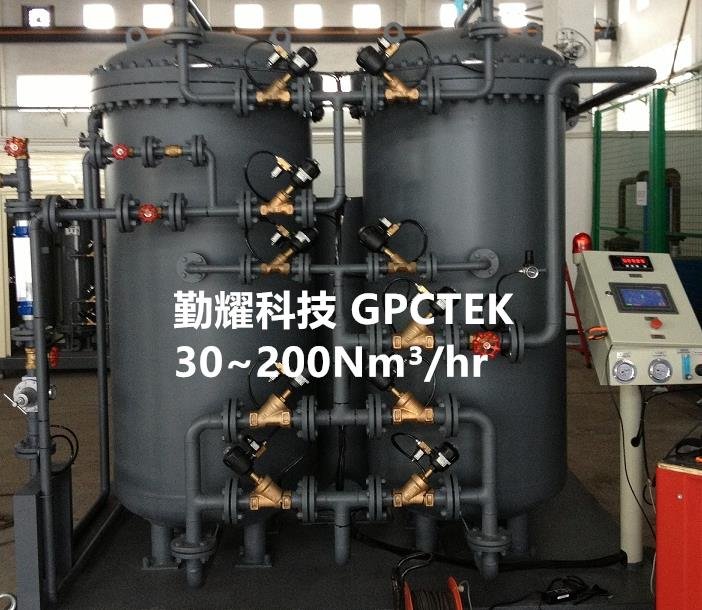
- Mechanism: PSA systems utilize a material called Carbon Molecular Sieve (CMS). Compressed air is pushed through a vessel containing CMS. The CMS preferentially adsorbs (traps) oxygen, carbon dioxide, and water vapor, allowing the nitrogen to pass through. When the CMS bed is saturated, the pressure is released, and the trapped gases are vented. A typical PSA system has two beds, allowing one to generate nitrogen while the other regenerates, ensuring a continuous flow.
- Purity Range: Typically produces nitrogen with purities from 95% to 99.999% (5 ppm oxygen).
- Ideal for: Applications requiring high purity and moderate to high flow rates, like laser cutting, food packaging, electronics manufacturing, and chemical blanketing.
- Membrane Nitrogen Generators:
- Mechanism: These systems use a bundle of semi-permeable hollow fibers. Compressed air is forced into these fibers. Oxygen, water vapor, and argon permeate through the fiber walls and are vented, while nitrogen molecules continue to flow through the fiber, exiting as high-purity nitrogen.
- Purity Range: Generally produces nitrogen with purities from 95% to 99.5%.
- Ideal for: Applications requiring lower to medium purity and variable flow rates, often used for tire inflation, fire prevention, and some industrial inerting processes.
- Advantages: Simpler design, lower maintenance, compact footprint.
The Components of an N2 Generation System
A complete on-site nitrogen generation system typically includes:
- Air Compressor: Provides the compressed air supply, the "raw material" for nitrogen.
- Air Treatment/Filtration System: Removes impurities like particulates, moisture, and oil vapor from the compressed air to protect the generator and ensure nitrogen purity.
- Nitrogen Generator: The core unit (PSA or Membrane) that separates nitrogen from the air.
- Nitrogen Receiver Tank: Stores the generated nitrogen, providing a buffer to meet peak demands and ensure a steady supply.
The Compelling Advantages of On-Site Generation
Switching to an N2 generator offers a host of benefits that directly address the challenges of traditional supply:
- Significant Cost Savings: This is often the primary driver. Once the initial capital investment is recouped (typically 18-36 months), your operational costs plummet. You eliminate delivery fees, rental charges, and boil-off losses. You only pay for the electricity to run your compressor and generator, and for periodic maintenance.
- Uninterrupted Supply & Control: You're no longer at the mercy of supplier delivery schedules, road conditions, or unexpected demand spikes. You generate nitrogen on-demand, 24/7.
- Enhanced Safety: Eliminating high-pressure cylinder handling drastically reduces the risk of workplace injuries. There's no cryogenic liquid to manage. Nitrogen is stored at a much lower pressure in the receiver tank.
- Tailored Purity: Generators can be configured to produce the exact purity level your application requires, meaning you're not paying for "over-spec'd" gas.
- Environmental Responsibility: By eliminating the need for tanker truck deliveries, you significantly reduce your carbon footprint associated with nitrogen transport.
- Space Optimization: While the generator itself requires space, it often frees up valuable floor space previously dedicated to storing numerous cylinders or a large LIN tank.
- Predictable Costs: Your nitrogen costs become primarily tied to electricity rates and maintenance, offering much greater predictability for budgeting.
N2 Generator vs. Traditional Nitrogen Supply Methods: A Head-to-Head Comparison
Let's break down the key factors when weighing these two fundamentally different approaches to nitrogen supply.
Cost: Upfront vs. Long-Term Expenses
- Traditional: Very low upfront cost (sometimes just cylinder/tank rental). High ongoing operational expenses (OPEX) due to gas purchases, delivery fees, and rental charges. Costs are variable and subject to supplier price increases.
- N2 Generator: Higher upfront capital expenditure (CAPEX) for the generator, compressor, and air treatment system. Significantly lower OPEX once installed, consisting mainly of electricity for the compressor and maintenance. The payback period is a critical calculation, often demonstrating substantial savings over a 3-5 year lifespan and beyond.
Supply Reliability & Control
- Traditional: Reliant on external suppliers. Risk of delays, missed deliveries, and "run-out" if demand unexpectedly spikes or if logistics are disrupted (e.g., weather events). Your supply chain is out of your direct control.
- N2 Generator: Complete control over your nitrogen supply. You generate it on-demand, eliminating delivery issues. A receiver tank provides a buffer, ensuring continuous supply even during peak usage. No more frantic calls to suppliers.
Purity & Flow Rate Flexibility
- Traditional: Suppliers offer a wide range of standard purities, often exceeding what's needed for many applications. Flow rate is limited by the output capacity of the cylinder or vaporizer.
- N2 Generator: Can be precisely configured for the exact purity (e.g., 98%, 99.5%, 99.999%) and flow rate required for your specific application. This means you only produce – and pay for – what you need. While certain ultra-high purities (99.9999%+) might still be the domain of specialty gases, standard industrial purities are easily achievable.
Safety Considerations
- Traditional: High-pressure cylinders are heavy and dangerous to move, posing crush and projectile risks if mishandled or damaged. Cryogenic liquid nitrogen presents severe cold burn hazards and displaces oxygen, creating asphyxiation risks in confined spaces.
- N2 Generator: Nitrogen is generated and stored at lower, safer pressures. Eliminates the need for manual handling of heavy cylinders or dealing with super-cold liquids. Significantly reduces the overall safety risk profile of your nitrogen supply.
Environmental Impact
- Traditional: The regular transportation of nitrogen from centralized production plants to your facility via trucks contributes significantly to carbon emissions and air pollution.
- N2 Generator: Generates nitrogen on-site from ambient air, virtually eliminating the carbon footprint associated with transportation. This aligns well with corporate sustainability goals and can enhance your company's green credentials.
Space Requirements
- Traditional: Requires dedicated space for cylinder storage (full and empty) or a large outdoor footprint for a bulk liquid tank and vaporizer.
- N2 Generator: The generator system (compressor, dryer, generator, receiver) requires a dedicated area, typically in an existing compressor room or utility area. While it occupies space, it often results in a net gain of usable floor space compared to a large cylinder inventory.
Maintenance & Operational Demands
- Traditional: Primarily involves managing supplier relationships, ordering, and swapping out cylinders or monitoring tank levels. Minimal direct equipment maintenance for the end-user.
- N2 Generator: Requires routine maintenance for the air compressor (filter changes, oil checks) and the generator itself (filter changes, sieve bed checks for PSA units). While this is an in-house responsibility, it's typically straightforward and well-documented.
Scalability
- Traditional: Scaling up means increasing orders or upgrading to a larger bulk tank, which can involve new contracts and infrastructure.
- N2 Generator: Systems are often modular. You can add additional generator modules or a larger compressor/receiver to meet growing demand. This offers flexibility to scale with your business needs.
Is a Nitrogen Generator Right for You? Key Decision Criteria
Deciding whether to invest in an N2 generator boils down to a few critical questions about your operation.
- Your Nitrogen Demand Profile:
- Volume: Do you use a significant amount of nitrogen? Generally, if your monthly spend on nitrogen exceeds a certain threshold (e.g., a few thousand dollars), a generator quickly becomes financially attractive.
- Purity: What purity level does your application actually require? Don't pay for 99.999% if 98% will do. Generators are excellent at matching specific purity needs.
- Flow Rate: Is your demand consistent, or does it fluctuate wildly? Generators can be sized to meet peak demands, with storage tanks buffering for consistency.
- Budget & Financial Outlook:
- Are you able to make a capital investment (CAPEX) for the equipment?
- What's your expected payback period? This will be a key factor in your return on investment (ROI) calculation.
- How critical is cost predictability to your budgeting process?
- Space Availability: Do you have suitable indoor or outdoor space for the generator system, including the compressor and air treatment?
- Safety Priorities: Is reducing the risks associated with handling high-pressure cylinders or cryogenic liquids a significant concern for your facility?
- Sustainability Goals: Does your company have targets for reducing its carbon footprint? An N2 generator can be a tangible step toward these goals.
Debunking Common Myths About Nitrogen Generators
Let's clear up some widespread misconceptions that might be holding you back.
- Myth 1: "Nitrogen generators can't achieve high purity."
- Reality: Modern PSA generators can consistently produce nitrogen with purities up to 99.999% (5 parts per million oxygen), which meets the requirements for most industrial applications, including laser cutting, electronics, and food packaging.
- Myth 2: "They're always more expensive upfront, so it's not worth it."
- Reality: While the initial capital cost is higher, the long-term operational savings often lead to a very attractive return on investment, with payback periods typically ranging from 18 to 36 months. After that, you're essentially generating nitrogen for pennies on the dollar compared to buying it.
- Myth 3: "Nitrogen generators are too complex to operate and maintain."
- Reality: Modern systems are largely automated and user-friendly, often featuring touch screen controls and remote monitoring. Routine maintenance is typically straightforward, involving filter changes and basic checks, often managed by your existing maintenance staff or a service contract.
- Myth 4: "They're only for very large industrial operations."
- Reality: Nitrogen generators come in a wide range of sizes, from compact units suitable for small labs or a single laser cutter, to large-scale systems for major manufacturing plants. The technology is scalable to fit diverse demand profiles.
Real-World Applications: Where N2 Generators Shine
The versatility and efficiency of on-site nitrogen generation make it a perfect fit for numerous industries:
- Food & Beverage: Inerting packaging to extend shelf life (MAP packaging), blanketing storage tanks to prevent oxidation, purging pipelines.
- Laser Cutting: Providing a clean, high-pressure cutting gas for precision metal fabrication.
- Electronics Manufacturing: Soldering, reflow ovens, and component storage, where oxygen must be excluded to prevent oxidation and ensure quality.
- Chemical & Pharmaceutical: Blanketing reactive chemicals, purging vessels, and transferring flammable liquids safely.
- Automotive: Tire inflation for improved fuel efficiency and extended tire life, airbag manufacturing.
- Oil & Gas: Pipeline purging, well stimulation, and general inerting processes.
Making the Switch: What to Consider Before Investing
If you're convinced an N2 generator is the right move, here’s a roadmap for a smooth transition:
- Conduct a Thorough Needs Assessment:
- Measure your current nitrogen consumption: Gather accurate data on your average and peak flow rates, as well as the required purity levels for each application. Don't guess; measure.
- Evaluate your existing compressed air system: Is it sufficient to supply the generator, or will upgrades be needed?
- Financial Analysis:
- Calculate the total cost of ownership (TCO) for both traditional supply and a generator over 5-10 years.
- Factor in electricity costs, maintenance, and potential tax incentives or depreciation benefits.
- Vendor Selection:
- Research reputable manufacturers and suppliers with a proven track record.
- Look for strong service and support capabilities.
- Request detailed proposals, including installation and warranty information.
- Space and Installation Planning:
- Determine the optimal location for the generator system, considering access to power, compressed air, ventilation, and proximity to points of use.
- Plan for necessary piping and electrical connections.
- Training and Maintenance:
- Ensure your team receives proper training on the operation and routine maintenance of the new system.
- Consider a service contract with your supplier for peace of mind.
The Future of Nitrogen Supply: A Sustainable and Controlled Path Forward
The choice between an N2 generator vs. traditional nitrogen supply methods is more than a procurement decision; it's a strategic investment in your company's future. It's about taking control of a critical resource, achieving significant cost efficiencies, bolstering workplace safety, and making a tangible commitment to environmental sustainability.
As industries evolve and the emphasis on efficiency and environmental responsibility grows, on-site nitrogen generation is increasingly becoming the preferred solution. By producing your own nitrogen, you're not just buying a gas; you're investing in operational independence, predictable costs, and a more sustainable path forward for your business. It's a move that many are making, and for good reason.