In an industrial landscape driven by precision, efficiency, and safety, a reliable source of nitrogen gas is non-negotiable. Whether you’re blanketing a volatile chemical, preserving delicate foods, or fabricating cutting-edge electronics, understanding the various types & configurations of nitrogen generators available is crucial for optimizing your operations and budget. Forget the endless cycle of cylinder rentals and delivery schedules; on-site nitrogen generation offers a transformative solution, providing pure N₂ directly from the air around us.
This guide is your compass to navigating the world of nitrogen generation, offering the insights you need to make an informed choice that aligns perfectly with your operational demands and purity requirements.
At a Glance: Your Nitrogen Generator Quick Guide
- Membrane Generators: Best for lower purity (95-99%) and smaller-scale needs. Simple, compact, cost-effective for entry-level use.
- PSA Generators: Ideal for high purity (up to 99.999%) and moderate to high flow rates. Robust, scalable, but higher initial cost.
- Cryogenic Generators: The choice for ultra-high purity and massive volumes. Complex infrastructure, highest upfront and operating costs.
- Key Factors: Always consider your required nitrogen purity, flow rate, energy efficiency, and total cost of ownership before deciding.
- Big Benefits: On-site generation means cost savings, constant availability, enhanced safety, and a reduced environmental footprint compared to traditional cylinders.
The Power of On-Demand N₂: Why Generators Matter
For decades, industries relied on delivered nitrogen in high-pressure cylinders or bulk liquid tanks. While these methods served their purpose, they came with inherent limitations: volatile supply chains, fluctuating costs, safety risks from handling heavy cylinders, and the environmental impact of transportation.
Nitrogen generators flip that script. They capture the N₂ right from the ambient air, isolating it from oxygen and other components to deliver a continuous, on-demand supply tailored to your specific purity and flow needs. This shift from reliance on external suppliers to in-house production offers unparalleled control, significant cost reductions, and a much safer working environment. When you're ready to dive deeper into all the ways these systems can benefit your operations, we encourage you to Explore our N2 generator guide.
Unpacking the Core Technologies: A Look at Generator Types
While all nitrogen generators aim to separate N₂ from the air, they achieve this feat using fundamentally different scientific principles. Let's break down the main contenders.
1. Membrane Nitrogen Generators: The Simplicity Solution
Imagine a microscopic filter that only lets certain molecules pass through easily. That's essentially how a membrane nitrogen generator works.
How They Work
Compressed air is pushed through bundles of hollow, semi-permeable polymer fibers. Oxygen, water vapor, and argon molecules, being smaller, permeate through the membrane walls more quickly and are vented out. The larger nitrogen molecules, however, are slowed down, allowing them to travel along the fiber and be collected as purified nitrogen gas. It's a continuous, straightforward process with no moving parts in the separation module itself.
Purity & Flow
Membrane systems typically deliver nitrogen purity ranging from 95% to 99%. While this might not be sufficient for the most demanding applications, it's perfectly adequate for a wide range of industrial uses. Flow rates vary significantly depending on the module size and required purity; higher purity generally means lower flow from a given module.
Advantages for Your Operation
- Low Operating Costs: Once installed, membrane generators have minimal energy consumption and very few maintenance requirements. No adsorbent materials to regenerate, no complex cycles.
- Compact Design: Their modular nature means they take up less space, making them ideal for facilities with limited real estate or for integration into existing systems.
- Simple & Reliable: With few moving parts, these systems boast high reliability and require minimal intervention. Start-up and shutdown are typically swift.
- Cost-Effective: For lower purity and smaller-scale applications, membrane generators offer an excellent return on investment, eliminating recurring cylinder costs without a significant upfront expenditure.
Limitations to Consider
- Limited Purity: If your process demands ultra-high purity nitrogen (e.g., 99.999%), a membrane system won't meet that standard.
- Efficiency at High Purity: Achieving purities above 99% with a membrane generator becomes less efficient, requiring more compressed air to produce the same volume of nitrogen.
Where They Shine: Key Applications
Membrane generators are the workhorses for applications that don't require extreme purity but benefit immensely from on-demand supply:
- Food Packaging (MAP): Extending shelf life for perishable items like produce, meats, and snacks by reducing oxygen levels. You can learn more about the science behind MAP packaging benefits and how nitrogen plays a crucial role.
- Laser Cutting: Providing a clean, inert atmosphere around the cutting zone to prevent oxidation and ensure crisp, clean cuts, especially with milder steels.
- Pharmaceutical Manufacturing: Creating controlled environments for less sensitive processes or for packaging.
- Electronics Manufacturing: Inerting small areas to prevent oxidation during assembly.
- Automotive & Aerospace: Tire inflation for commercial aircraft and high-performance vehicles, where pure nitrogen helps maintain consistent pressure and reduces corrosion.
2. Pressure Swing Adsorption (PSA) Nitrogen Generators: The High-Purity Powerhouse
When high purity is paramount, Pressure Swing Adsorption (PSA) technology steps up to the plate. This method leverages a clever molecular sieve to snatch oxygen directly out of the air.
How They Work
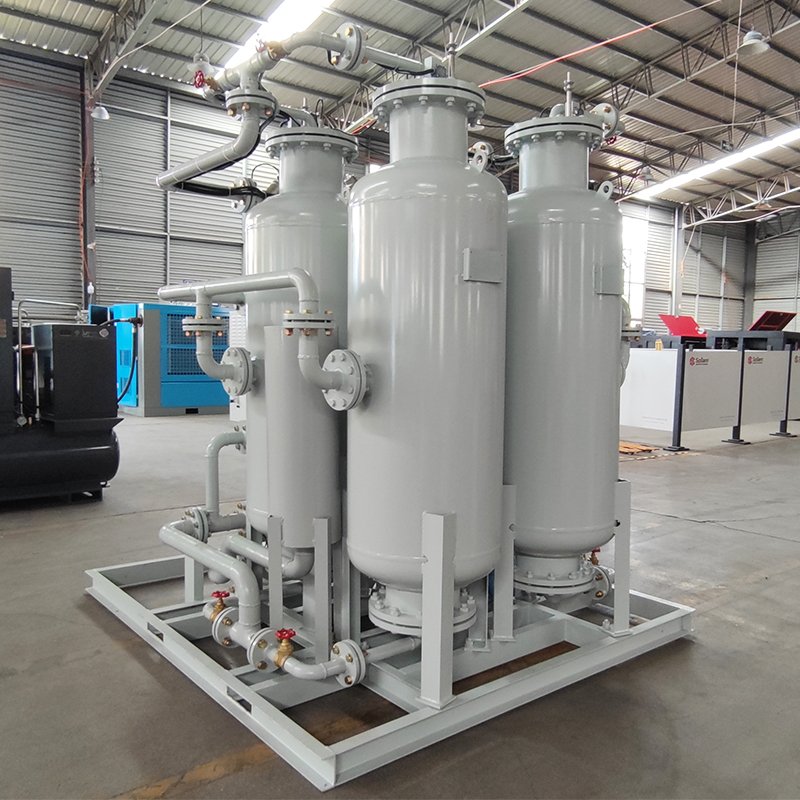
PSA generators typically use two or more towers filled with a specialized adsorbent material, most commonly Carbon Molecular Sieve (CMS). Compressed air enters one tower, and under pressure, the CMS selectively adsorbs (or traps) oxygen, carbon dioxide, and water vapor molecules, allowing the larger nitrogen molecules to pass through and be collected.
Once the CMS in the first tower becomes saturated with oxygen, the air flow is diverted to the second tower. Simultaneously, the first tower is depressurized (the "swing" in PSA), releasing the adsorbed oxygen and regenerating the CMS for its next cycle. This continuous alternation between adsorption and desorption across multiple beds ensures an uninterrupted flow of high-purity nitrogen.
Purity & Flow
PSA systems are renowned for their ability to achieve very high nitrogen purity levels, ranging from 99% up to an impressive 99.999% (or even 7 ppm oxygen content). They are also highly scalable, capable of producing large volumes of nitrogen efficiently.
Advantages for Your Operation
- Superior Purity: If your application demands nitrogen with minimal oxygen content, PSA is your go-to solution. This makes them ideal for critical processes where even trace amounts of oxygen could be detrimental.
- High Flow Capability: PSA generators are well-suited for applications requiring substantial volumes of nitrogen, making them a scalable choice for growing operations.
- Robust & Reliable: These systems are engineered for continuous, heavy-duty operation, offering long service life with proper maintenance.
- Flexible Purity Output: Many PSA systems can be adjusted to deliver different purity levels, allowing you to fine-tune production based on specific application needs. For a deeper dive, consider understanding industrial nitrogen purity levels.
Limitations to Consider
- Higher Initial Investment: Compared to membrane systems, PSA generators typically require a greater upfront capital expenditure due to their more complex design and specialized adsorbent materials.
- Energy Intensity: The pressure swing and regeneration cycles are energy-intensive, meaning higher operational costs compared to membrane systems, although often still significantly less than delivered nitrogen.
Where They Shine: Key Applications
PSA generators are the backbone for industries where nitrogen purity is a critical safeguard:
- Electronics Manufacturing: Essential for creating inert environments during wafer fabrication, soldering, and packaging to prevent oxidation of delicate components. Nitrogen plays a critical role of inert gases in semiconductor manufacturing.
- Chemical Processing: Used for inerting reactors, blanketing storage tanks (e.g., solvents, oils), and purging pipelines to prevent fires, explosions, and undesirable reactions.
- Metal Fabrication: Shielding gas for welding and laser cutting (especially stainless steel and aluminum) to ensure clean, strong welds and cuts free from oxidation.
- Food Packaging: High-purity nitrogen for advanced MAP packaging, extending the shelf life of highly sensitive foods.
- Pharmaceuticals: Creating inert atmospheres during the production, processing, and packaging of oxygen-sensitive active pharmaceutical ingredients (APIs), vaccines, and biologics.
- Oil & Gas: Pipeline purging, well inerting, and blanketing storage tanks to enhance safety and prevent combustion.
- Laboratories: Providing a controlled, oxygen-free atmosphere for analytical instruments and sensitive experiments.
3. Cryogenic Nitrogen Generators: The Ultra-Purity, Large-Scale Solution
When purity needs to be absolute, and volume requirements are immense, cryogenic air separation plants come into play. These are the giants of nitrogen production.
How They Work
Cryogenic nitrogen generation is a much more complex process. It begins by compressing and cooling ambient air to extremely low temperatures (around -196°C or -320°F). At these frigid temperatures, air liquefies. This liquid air is then fed into a distillation column, where nitrogen, oxygen, and argon are separated based on their different boiling points. Nitrogen, with the lowest boiling point, vaporizes first and is collected as ultra-high purity gaseous nitrogen. This sophisticated process involves heat exchangers, multi-stage compressors, and expansion turbines.
Purity & Flow
Cryogenic systems deliver ultra-high purity nitrogen, often reaching 99.9999% (less than 1 ppm oxygen), and are designed for very large-scale production volumes. They are typically the choice for industrial complexes requiring thousands of cubic meters per hour of nitrogen.
Advantages for Your Operation
- Exceptional Purity: No other on-site generation method can match the purity levels achieved by cryogenic distillation.
- Massive Production Capacity: Ideal for large industrial operations with continuous, high-volume nitrogen demands.
- Minimal Maintenance (Once Operational): While the initial setup is complex, the operational phase of the separation process itself is highly automated and stable, requiring relatively low ongoing maintenance.
Limitations to Consider
- Highest Operating Costs: The energy required to cool air to cryogenic temperatures makes these systems very energy-intensive, translating to higher operational expenses.
- Complex Infrastructure & Investment: Cryogenic plants require significant upfront capital investment and a large, complex infrastructure, making them unsuitable for smaller operations.
- Long Start-up Times: Bringing a cryogenic plant online from a cold start can take many hours.
Where They Shine: Key Applications
Cryogenic generators are reserved for industries where both purity and scale are paramount:
- Semiconductor Manufacturing: For the most critical steps in chip fabrication, where even parts-per-billion impurities can ruin an entire batch.
- Aerospace: Large-scale purging and inerting processes for spacecraft and launch vehicles.
- Pharmaceuticals & Medical: Cryosurgery, biological sample preservation (e.g., blood banks, tissue banks), and large-scale cryogenic freezing processes.
- Large-Scale Industrial Processes: Metal treatment, welding, and inerting in massive chemical plants or steel mills.
- Laboratories: Providing ultra-pure nitrogen for highly sensitive analytical equipment and research.
Side-by-Side: Comparing Your Nitrogen Generator Options
Choosing the right generator means weighing the critical factors against your specific needs. Here’s a quick comparison to help solidify your understanding:
| Feature | Membrane Generator | PSA Generator | Cryogenic Generator |
|---|---|---|---|
| Purity Range | 95% - 99% | 99% - 99.999% | 99.999% - 99.9999% (Ultra-High) |
| Flow Rate | Low to Medium | Medium to High | Very High (Large Scale) |
| Initial Cost | Lowest | Moderate to High | Highest |
| Operating Cost | Low | Moderate (Energy-intensive) | Highest (Very energy-intensive) |
| Complexity | Low (Few moving parts) | Moderate (Cycling beds, valves) | High (Liquefaction, distillation) |
| Footprint | Small, Compact | Medium | Large (Industrial plant scale) |
| Start-up Time | Minutes | Minutes to an hour | Hours |
| Best For | Lower purity, smaller volumes, limited space | High purity, consistent supply, scalable | Ultra-high purity, massive continuous demand |
Beyond the Technology: Critical Selection Factors
The type of generator is just one piece of the puzzle. To truly optimize your nitrogen supply, you need to consider a few more fundamental aspects.
1. Capacity Requirements: How Much Nitrogen Do You Really Need?
This is perhaps the most fundamental question. You need to accurately calculate your maximum instantaneous nitrogen flow rate (e.g., in cubic feet per minute or normal cubic meters per hour) and your total daily or weekly consumption. Over-sizing leads to unnecessary capital expenditure and potentially higher energy use for standby. Under-sizing leads to insufficient supply and operational bottlenecks. Consider future growth when assessing capacity.
2. Purity Levels: No More, No Less Than Necessary
As you've seen, purity dictates the generator type. Paying for 99.999% purity when your application only requires 98% is a waste of resources. Conversely, compromising on purity for a sensitive process can lead to product degradation, equipment damage, or safety hazards. Always consult your process specifications.
3. Energy Efficiency: A Long-Term Cost Perspective
Nitrogen generation, particularly PSA and cryogenic, consumes energy. Evaluate the generator's specific energy consumption (e.g., kWh per cubic meter of nitrogen). A seemingly cheaper generator upfront might cost significantly more over its lifetime due to higher electricity bills. Factors like air compressor efficiency (which feeds the generator) also play a huge role. Understanding a deeper dive into nitrogen generation costs can help you model your long-term expenses effectively.
4. Initial Investment vs. Operational Costs: The Total Cost of Ownership
Don't just look at the sticker price. Factor in:
- Initial Investment: The cost of the generator itself, installation, piping, and any necessary air compression or filtration upgrades.
- Operational Costs: Electricity consumption, routine maintenance (filter changes, adsorbent replacement for PSA), service contracts, and potential labor costs.
A thorough Total Cost of Ownership (TCO) analysis over a 5-10 year period will reveal the true economic picture and guide you to the most financially sound decision.
The Undeniable Benefits of On-Site Nitrogen Generation
Regardless of the technology you choose, moving from external supply to on-site nitrogen generation offers compelling advantages that go beyond mere convenience.
- Cost-Effectiveness: Eliminate recurring cylinder rental fees, delivery charges, and hazardous material surcharges. Your operational costs become predictable and significantly lower over time.
- On-Demand Availability: Enjoy an uninterrupted supply of nitrogen gas 24/7. No more waiting for deliveries, running out of gas mid-shift, or managing bulky cylinder inventories. This means zero downtime related to nitrogen supply.
- Enhanced Safety: Significantly reduce the risks associated with storing, handling, and changing out high-pressure gas cylinders. Fewer manual tasks and reduced traffic for deliveries contribute to a safer workplace. Implementing best practices for industrial gas safety becomes much simpler with on-site generation.
- Environmental Sustainability: Minimize your carbon footprint by eliminating the need for fossil-fuel-powered transport of nitrogen cylinders and bulk tanks. On-site generation is a greener approach to industrial gas supply.
- Purity Control: You have direct control over the purity of the nitrogen produced, ensuring it consistently meets your application's exact specifications.
Nitrogen's Role Across Key Industries: Real-World Impact
Nitrogen isn't just an inert gas; it's a critical component in countless industrial processes. Understanding its specific applications can further clarify your generator needs.
Food and Beverage Sector: Extending Shelf Life, Enhancing Quality
- Modified Atmosphere Packaging (MAP): The most common application. Nitrogen replaces oxygen in food packaging, dramatically slowing down spoilation, preventing rancidity, and inhibiting the growth of aerobic bacteria and molds for products like fresh produce, meats, dairy, snacks, and coffee.
- Freezing and Blanching: Liquid nitrogen is used for rapid cryogenic freezing of foods, preserving cellular structure, flavor, and nutritional value. In blanching, it helps prevent enzymatic reactions that degrade food quality.
- Carbonation and Draft Beer Systems: Used in some beverage carbonation processes to create smoother textures and creamy heads (e.g., stouts) and as a push gas in draft beer systems to maintain consistent quality and pressure.
Pharmaceutical Industry: Safeguarding Purity and Potency
- Inert Atmosphere Creation: Critical for manufacturing oxygen-sensitive medications, including vaccines, biologics, and active pharmaceutical ingredients (APIs). Nitrogen blankets prevent oxidation and degradation during synthesis, processing, and storage.
- Pharmaceutical Packaging: Displacing oxygen in drug packaging (e.g., vials, syringes) to prevent degradation, ensuring product integrity and efficacy throughout its shelf life.
- Cryopreservation: Liquid nitrogen provides the ultra-low temperatures required to preserve biological samples (blood, cells, tissues) for long-term storage in research, diagnostics, and therapeutic applications.
Chemical Manufacturing: Preventing Hazards, Ensuring Stability
- Inerting and Purging: Nitrogen purges reactors, pipelines, and storage tanks to create a non-reactive atmosphere, crucial for handling flammable, explosive, or oxygen-sensitive materials (e.g., solvents, catalysts) to prevent combustion or unwanted reactions.
- Blanketing: A protective layer of nitrogen over chemicals in storage tanks prevents oxidation, controls moisture ingress, and inhibits the formation of explosive vapor mixtures, maintaining product quality and safety.
Electronics and Semiconductor Industry: Precision and Purity for Performance
- Inert Atmosphere: Nitrogen is indispensable in cleanrooms during semiconductor fabrication, etching, deposition, and photolithography. It prevents oxidation, contamination, and moisture ingress, which are detrimental to microelectronic components.
- Flat Panel Display and OLED Production: Maintains a controlled, oxygen-free environment during the production of these sensitive displays, protecting materials from degradation and ensuring high performance.
- Clean Rooms and Packaging: Nitrogen is used to purge and purify air in cleanrooms and within protective packaging, removing airborne contaminants and moisture that could compromise sensitive electronic components.
Metals and Manufacturing: Clean Cuts, Strong Welds
- Welding and Cutting: Utilized as a shielding gas in processes like laser cutting (especially for stainless steel) and welding to prevent oxidation of molten metal, ensuring clean, dross-free cuts and high-quality, corrosion-resistant welds.
- Metal Purging: Purges metal pipes and tanks before welding or coating to remove oxygen, preventing contamination like rust, scale, or porosity in the finished product.
- Blanketing and Heat Treatment: Prevents oxidation of metals during various heat treatment processes (e.g., annealing, hardening) and controls the atmosphere in furnaces to achieve desired material properties without surface defects.
Oil and Gas Industry: Safety and Efficiency Below Ground
- Pipeline Purging: Purging pipelines with nitrogen before operations removes oxygen and flammable gases, significantly reducing fire and explosion risks and ensuring a safer working environment.
- Well Inerting: Injecting nitrogen into oil and gas wells displaces flammable gases like methane or hydrogen sulfide, mitigating explosion hazards during drilling, maintenance, and production activities.
Aerospace and Space Exploration: High-Stakes Inerting
- Aircraft Tire Inflation: Nitrogen is preferred over air for inflating aircraft tires due to its inertness, which reduces the risk of combustion at high temperatures, and its resistance to temperature fluctuations, which helps maintain consistent tire pressure at varying altitudes.
- Purging Systems: Used extensively for purging fuel tanks, hydraulic systems, and other critical components in aircraft and spacecraft, ensuring oxygen-free environments during manufacturing, maintenance, and pre-flight checks.
Addressing Common Questions About Nitrogen Generators
Even with a clear understanding of the types, some questions naturally arise when considering a significant investment like a nitrogen generator.
"Can I use a nitrogen generator for any application?"
While versatile, the suitability depends heavily on the required purity and flow rate. For niche applications demanding extremely high flow rates AND ultra-high purity (e.g., large industrial complexes with multi-megawatt power needs), a cryogenic plant might be the only viable on-site solution. For everything else, PSA or membrane will cover the vast majority of industrial needs.
"Is the nitrogen from a generator truly as good as supplied nitrogen?"
Absolutely. In many cases, it can be even better because you control the source and purity. With cylinders, there's always a slight risk of residual contaminants or inconsistent purity between batches. An on-site generator, properly maintained, delivers consistent, specified purity around the clock.
"What's the typical lifespan of a nitrogen generator?"
With proper maintenance, both membrane and PSA generators are built for longevity. Membrane modules can last 10-15 years or more, while PSA adsorbent materials (CMS) can remain effective for 10+ years. The robust compressors and other components are designed for industrial duty cycles. Cryogenic plants have even longer operational lifespans.
"How much maintenance do they really need?"
Maintenance is generally straightforward. For membrane systems, it's primarily compressor maintenance (if integrated) and filter changes. For PSA systems, it involves regular filter changes, valve inspections, and occasional replacement of adsorbent material after many years. All systems benefit from routine checks and calibration.
"What if my purity needs change over time?"
Some PSA systems offer adjustable purity settings, giving you flexibility. If you anticipate a significant increase in purity requirements, it’s often more cost-effective to invest in a PSA unit from the outset, even if your initial needs are met by a membrane, to future-proof your investment.
Moving Forward: Your Next Steps in Nitrogen Generation
Choosing the ideal nitrogen generator isn't about finding the most advanced technology; it's about finding the right technology for your specific needs. By carefully evaluating your required purity, flow capacity, and the total cost of ownership, you can confidently select a system that not only meets your current demands but also offers the flexibility and reliability to support your future growth.
Start by conducting a thorough audit of your current nitrogen consumption. Document your peak flow rates, average daily usage, and the precise purity requirements for each application. Then, explore the specific features and benefits of membrane, PSA, and, if applicable, cryogenic systems.
The shift to on-site nitrogen generation is a strategic investment in efficiency, safety, and sustainability. It's about taking control of a critical resource and transforming your operational landscape. With the insights from this guide, you're well-equipped to make that transformation a successful one.